
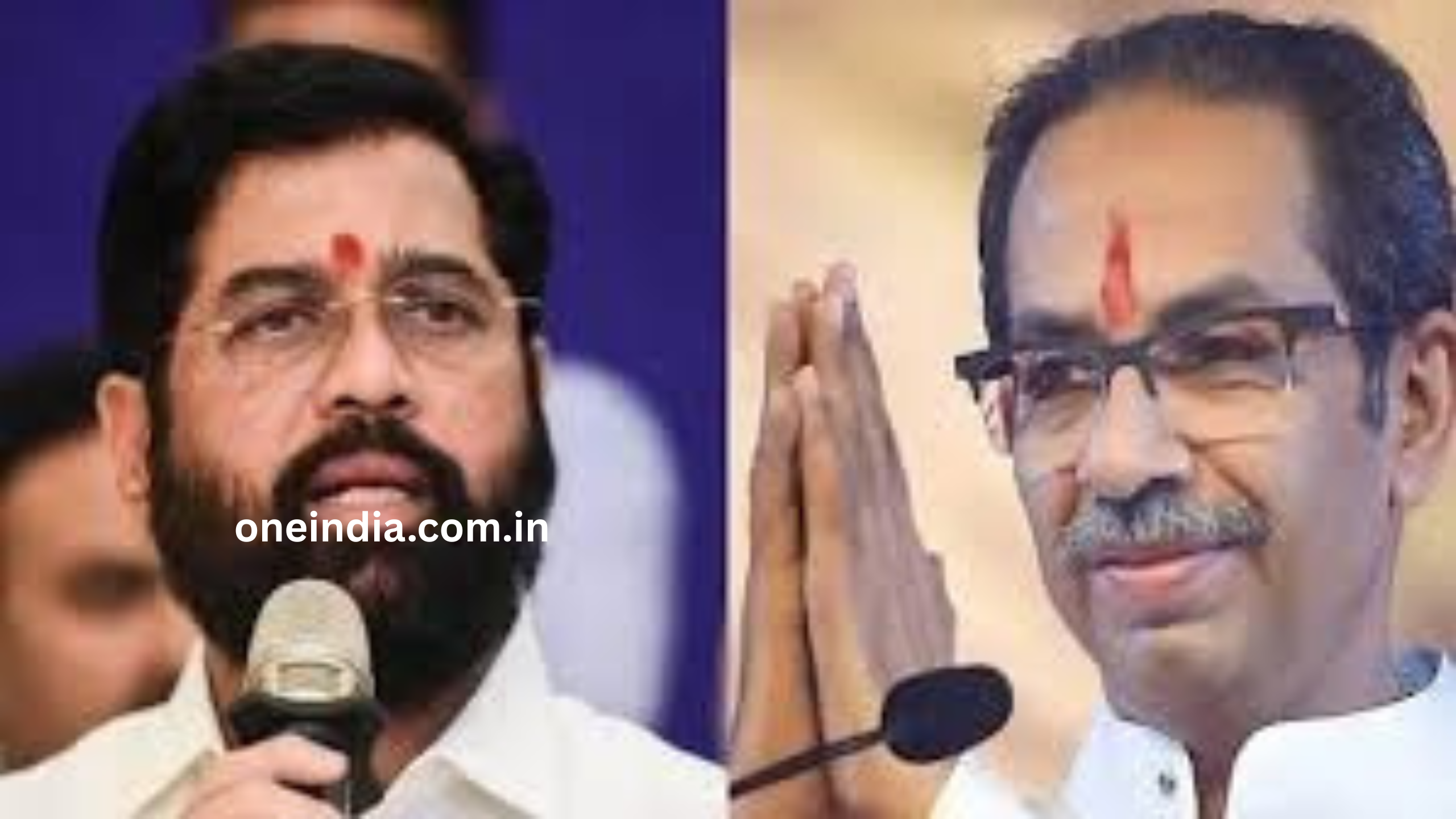
Maharashtra’s political landscape has been shaken by a storm of accusations, internal party splits, and leadership struggles in recent years. At the heart of this chaos lies a bitter feud between two key political figures: Eknath Shinde, the current Chief Minister of Maharashtra, and Uddhav Thackeray, the former Chief Minister and leader of a faction of the Shiv Sena. Shinde recently launched a blistering attack on Thackeray, accusing him of betraying Devendra Fadnavis and the Bharatiya Janata Party (BJP) during the post-election drama following the assembly polls.
This article explores the origins of this political rift, the alliances formed and broken, the ideological battles within Shiv Sena, and the larger implications for Maharashtra’s governance and future elections.
Chapter One: The Roots of the Shiv Sena-BJP Alliance
To understand the feud between Eknath Shinde and Uddhav Thackeray, we need to look at the history of the Shiv Sena-BJP alliance. Shiv Sena was founded by Bal Thackeray with the aim of protecting the rights and culture of the Marathi-speaking population of Maharashtra. Initially, it focused on regional identity, but over time, it embraced a broader Hindutva ideology, which aligned with BJP’s nationalist vision.
For decades, Shiv Sena and BJP remained political allies in Maharashtra. While Shiv Sena held a dominant position in the early years, BJP gradually grew in strength across India and in Maharashtra, particularly with the rise of Narendra Modi as Prime Minister and Devendra Fadnavis as a strong leader in the state.
Their alliance was based on a common ideological framework—pro-Hindu policies, nationalism, and economic development. They often contested elections together, pooling their resources and voter bases.
Chapter Two: The Maharashtra Assembly Elections and the Fallout
In the recent Maharashtra Assembly elections, BJP and Shiv Sena contested as pre-poll allies. Their combined performance secured them a simple majority, leading many to believe that a BJP-Shiv Sena coalition government was imminent.
However, once the results were declared, a major conflict erupted. Uddhav Thackeray insisted that there had been an agreement for power-sharing that included rotating the Chief Minister’s post between the two allies. BJP leaders, particularly Fadnavis, denied that any such promise had been made.
The disagreement quickly escalated. Uddhav Thackeray chose to break away from the BJP and instead joined forces with ideologically opposed parties—Congress and Nationalist Congress Party (NCP)—to form the Maha Vikas Aghadi (MVA) government.
This unexpected political maneuver stunned many in Maharashtra and across India. The formation of the MVA was seen by BJP supporters and leaders like Eknath Shinde as a deep betrayal of the ideological commitment between Sena and BJP.
Chapter Three: Shinde’s Rebellion and Rise
Eknath Shinde was a senior leader in Shiv Sena and held significant influence over the party’s elected MLAs. A loyal Shiv Sainik for many years, Shinde had worked under the leadership of Bal Thackeray and was closely associated with the party’s traditional Hindutva ideology.
After Uddhav aligned with Congress and NCP, many Shiv Sena leaders and grassroots workers felt alienated. Shinde, reflecting the sentiments of these disgruntled members, began organizing support to oppose Uddhav’s alliance with the opposition.
Eventually, Shinde led a dramatic rebellion. Along with a large group of MLAs, he broke away from the Shiv Sena and aligned with the BJP once again. With BJP’s backing, Shinde staked claim to form the government and was appointed as the new Chief Minister of Maharashtra, with Fadnavis serving as his deputy.
This power shift marked a major transformation in Maharashtra politics. It effectively split the Shiv Sena into two factions—one led by Uddhav Thackeray and the other by Eknath Shinde.
Chapter Four: The Betrayal Allegation
Eknath Shinde recently reignited the controversy by accusing Uddhav Thackeray of betraying BJP and Devendra Fadnavis. In a public address, Shinde declared:
“Uddhav Thackeray backstabbed the BJP after winning the elections with their support. This was not just political opportunism, but a betrayal of the people’s trust.”
He further argued that the alliance between Shiv Sena and the Congress-NCP combine was ideologically incompatible and went against the legacy of Bal Thackeray, who had always stood firmly against Congress politics.
Shinde also expressed disappointment at how Uddhav sidelined senior Shiv Sena leaders and concentrated power within a close circle. He blamed this leadership style for the party’s internal collapse and eventual split.
Chapter Five: Uddhav Thackeray’s Counter
Uddhav Thackeray has not remained silent in the face of Shinde’s attacks. In interviews and speeches, Uddhav defended his decision to ally with Congress and NCP by citing the BJP’s increasing arrogance and refusal to honor political commitments.
He maintained that BJP’s behavior after the election results showed a lack of respect for its allies. Uddhav also accused BJP of trying to dominate regional parties and erode their identity. According to him, aligning with Congress and NCP was the only way to prevent Maharashtra from becoming a puppet state under BJP control.
Regarding Eknath Shinde’s rebellion, Uddhav called it an act of betrayal fueled by ambition and backdoor political manipulation. He claimed that BJP orchestrated the entire defection drama to topple a legitimately elected government.
Chapter Six: The Legal and Constitutional Battle
Following the Shiv Sena split, both factions approached the Election Commission of India to claim the party name and symbol. The legal wrangling added further complexity to the political saga.
Eventually, the Commission recognized the Eknath Shinde faction as the legitimate Shiv Sena. This was a major blow to Uddhav, who had already lost the Chief Ministership and now lost the party identity too.
Legal experts and political analysts weighed in on the issue, with many highlighting the evolving nature of Indian politics, where party loyalty and ideology often take a backseat to strategic alliances and personal ambition.
The courts were also approached to resolve constitutional questions related to defection laws, anti-party activities, and the Speaker’s powers in disqualifying rebel MLAs. The issue remains a live political debate in Maharashtra.
Chapter Seven: Impact on BJP and Devendra Fadnavis
Devendra Fadnavis, once seen as BJP’s unquestioned face in Maharashtra, had to take a backseat in the new power-sharing arrangement. Though he initially resisted taking the deputy role under Shinde, he eventually accepted the position, claiming it was for the greater good.
BJP supporters were divided—some were pleased with the re-entry into government, while others believed that Fadnavis had been sidelined. However, over time, the Shinde-Fadnavis partnership has worked relatively smoothly, presenting a united front.
This cooperation helped BJP regain its foothold in Maharashtra, particularly in urban regions, and rebuild trust with regional leaders who had grown wary of the party’s centralizing tendencies.
Chapter Eight: Public Perception and Voter Response
Among the public, reactions to the political developments have been mixed. A section of voters sympathized with Uddhav Thackeray for being ousted unceremoniously. Others supported Eknath Shinde for restoring the ideological purity of the Shiv Sena.
Traditional Shiv Sena voters, especially in rural and semi-urban areas, were confused by the realignment of political loyalties. Meanwhile, BJP’s core support base remained intact, although its image took a temporary hit.
Surveys and political analysts suggested that voter priorities were shifting toward governance, inflation, and job creation, rather than ideological fidelity or party loyalty. However, the emotional and symbolic appeal of Bal Thackeray’s legacy continued to be a critical factor in influencing voter behavior.
Chapter Nine: Future of Maharashtra Politics
The future of Maharashtra politics now hinges on how the two factions of Shiv Sena consolidate their positions. Uddhav Thackeray is trying to rebuild his political base by projecting himself as a secular, development-oriented leader. He has focused on urban issues, youth outreach, and digital engagement.
Eknath Shinde, on the other hand, is strengthening his leadership within the traditional Shiv Sena structure. Backed by the BJP machinery, he is focusing on expanding his reach across the state and attracting disillusioned leaders from other parties.
The next state elections will be a major test for both leaders. If Shinde can maintain unity among his MLAs and deliver on governance, he could emerge as a long-term force in Maharashtra. If Uddhav regains momentum and public sympathy, he might reclaim his position as a significant challenger.
Frequently Asked Questions
Who is Eknath Shinde?
Eknath Shinde is the current Chief Minister of Maharashtra. He was a senior leader in Shiv Sena but broke away to form his own faction and aligned with the BJP.
What did Eknath Shinde accuse Uddhav Thackeray of?
Eknath Shinde accused Uddhav Thackeray of betraying the BJP and Devendra Fadnavis by breaking the pre-poll alliance and forming a government with Congress and NCP after the assembly elections.
Why did Shiv Sena split into two factions?
The party split occurred after ideological differences emerged between Uddhav Thackeray and other senior leaders, including Eknath Shinde, especially over the alliance with Congress and NCP.
What is the Maha Vikas Aghadi (MVA)?
The MVA is a political alliance formed by Shiv Sena (under Uddhav), the Congress, and the Nationalist Congress Party (NCP) to form the Maharashtra government after the assembly elections.
How did Eknath Shinde become Chief Minister?
Eknath Shinde led a rebellion with a group of MLAs, gained BJP’s support, and staked claim to form a new government. The governor invited him to take oath as Chief Minister.
What role did Devendra Fadnavis play in this political shift?
Devendra Fadnavis supported Eknath Shinde’s move and joined the new government as Deputy Chief Minister, despite initially refusing the role.
What was Uddhav Thackeray’s response to Shinde’s rebellion?
Uddhav Thackeray accused BJP of orchestrating the rebellion and called it a betrayal of democratic values. He also criticized Shinde for going against party discipline.
What is the current status of the Shiv Sena party symbol?
The Election Commission granted the Shiv Sena name and symbol to the Eknath Shinde faction after reviewing the claims of both sides.
How has the public responded to this political crisis?
Public opinion is divided. Some support Shinde’s return to Hindutva roots, while others sympathize with Uddhav’s leadership and his development agenda.
What could be the impact on upcoming elections in Maharashtra?
The split and reshuffling have changed the political equations in the state. The next elections will likely test the strength of both factions and BJP’s alliance strategy.
Conclusion
The accusation by Eknath Shinde that Uddhav Thackeray betrayed Devendra Fadnavis and the BJP is more than just a personal grudge—it represents a deep ideological and political rupture in Maharashtra’s ruling class.
