
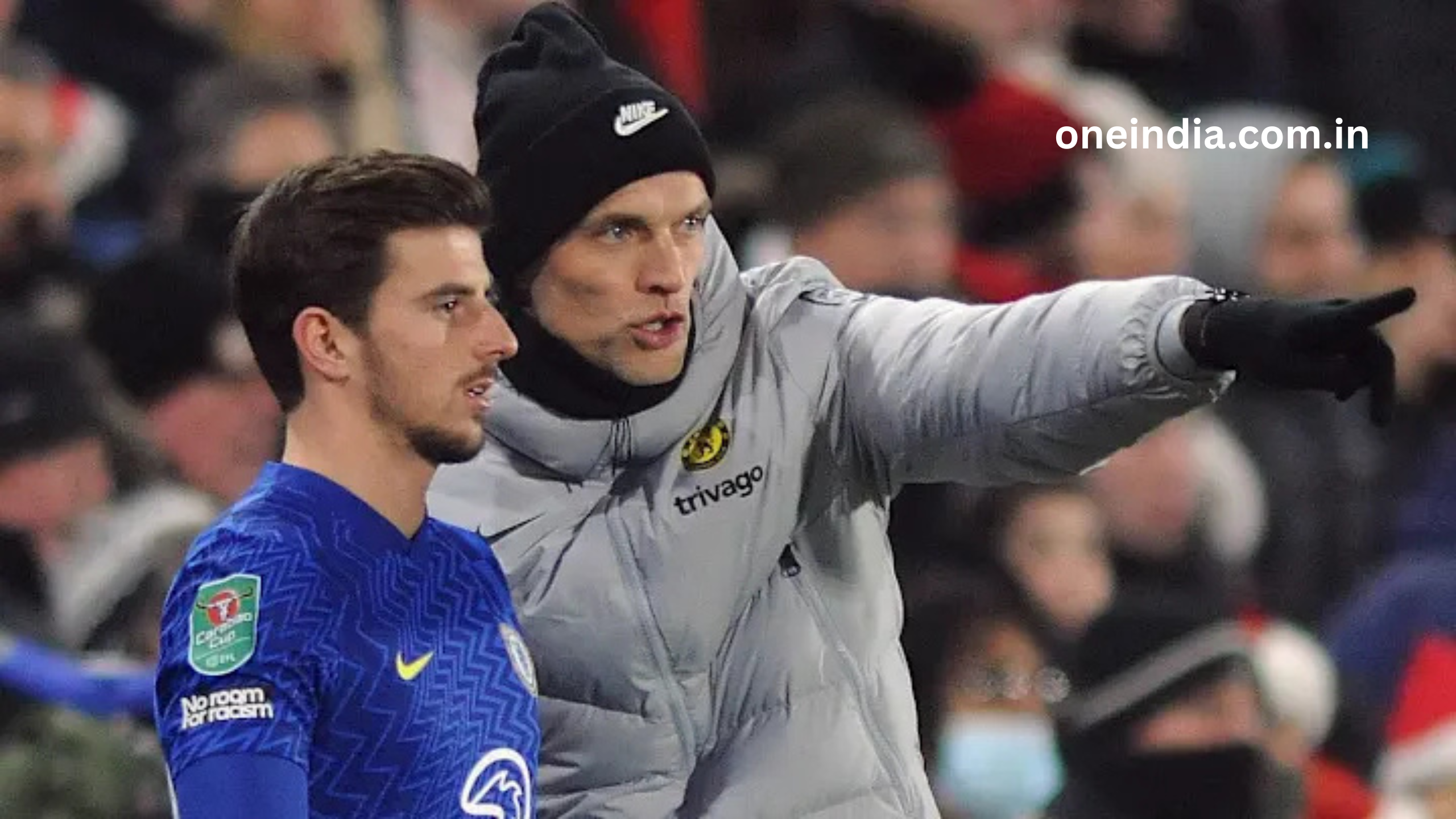
Mason Mount, the dynamic and technically gifted midfielder, has long been a subject of national and international football discourse. Having risen through the ranks at Chelsea, the Englishman enjoyed a rapid ascent under various managers, with Thomas Tuchel playing a significant role during his most prolific period at Stamford Bridge. Despite this previous partnership, Mount recently made headlines by cautioning that his historical connection with Tuchel does not guarantee him a return to the England national team.
His statement reflects a grounded and realistic mindset—one shaped by competition, form, and the evolving tactics of both club and country. In this article, we’ll explore the deeper implications of Mount’s statement, review his career trajectory, assess the role of managers like Tuchel in his development, and examine what lies ahead for both the player and England’s midfield setup.
Mason Mount: A Career Built on Merit, Not Connections
Mount has never been one to rely on relationships to advance his career. From his earliest days at Chelsea’s Cobham academy, he distinguished himself through work ethic, intelligence, and creativity on the pitch. Loan spells at Vitesse Arnhem and Derby County gave him invaluable first-team experience, proving his ability to adapt and thrive under different footballing systems and cultures.
His time at Derby County under Frank Lampard was pivotal. Lampard trusted the young midfielder with a prominent role, and Mount repaid that trust with consistent performances. When Lampard took over at Chelsea, he brought Mount back to the club and integrated him into the first team—a move that, although criticized by some, ultimately vindicated the manager’s faith.
Tuchel’s arrival at Chelsea added a new layer to Mount’s development. Despite being viewed as a Lampard loyalist, Mount quickly earned the trust of the German coach and became a key player in his setup. His performances in the UEFA Champions League-winning campaign were stellar, underlining his ability to perform on the biggest stage.
The Tuchel Factor: More Than Just a Familiar Face
Thomas Tuchel’s arrival at Chelsea was transformative. The team shifted to a more tactically disciplined and defensively solid unit, and Mount’s adaptability made him an invaluable asset in this setup. Tuchel praised Mount’s work rate, pressing ability, and vision—qualities that fit perfectly with his structured playing philosophy.
Yet, Mount is quick to downplay the notion that a prior working relationship with a coach guarantees future opportunities. In his own words, football is about current form, team needs, and competition for places—not historical alliances. This attitude reveals a mature perspective. He recognizes that no player is automatically entitled to a national call-up based on past associations.
Mount’s stance also reflects the competitive nature of the England midfield. With emerging stars and established figures all jostling for limited spots, each selection window brings renewed scrutiny. Simply being on good terms with a prominent manager isn’t enough to tip the balance.
Current Form and Challenges
Since his move to Manchester United, Mount’s journey has seen its fair share of ups and downs. Injuries, tactical shifts, and stiff competition have limited his opportunities to establish a consistent role. Nevertheless, the midfielder remains committed to regaining peak form and proving his value to both club and country.
Form is a major factor in international selections. England boss Gareth Southgate has always emphasized performance levels and match fitness. Mount knows this and appears determined to focus on the elements within his control—training, recovery, and match output—rather than banking on personal history with influential figures like Tuchel.
Another challenge Mount faces is the evolution of England’s tactical approach. Southgate has experimented with various systems, including double pivots, advanced midfield trios, and wide creators. Mount’s versatility can be an asset, but it also means he must compete in multiple roles against specialists like Jude Bellingham, Phil Foden, Declan Rice, and others.
The Midfield Conundrum: England’s Depth and Dilemma
The English national team is currently blessed with a wealth of midfield talent. Jude Bellingham is becoming a talismanic figure, while Declan Rice provides strength and stability in the holding role. Phil Foden, James Maddison, and others offer creative spark and attacking prowess. This depth is both a blessing and a challenge for players like Mount.
To earn a place in this crowded field, Mount must distinguish himself not only through performance but also through clarity of role. Is he best as an attacking midfielder, a box-to-box engine, or a wide-forward hybrid? His ability to function across different roles makes him a valuable squad player, but it also demands consistent impact in whichever position he’s deployed.
Tuchel’s system at Chelsea allowed Mount to flourish in hybrid roles, blending pressing responsibilities with attacking instincts. For England, however, the tactical environment can be less consistent, especially given the differences between tournament and qualifying setups. Mount’s challenge is to translate club success into a consistent and impactful international presence.
Managerial Influence vs. Individual Performance
Mount’s comments underline a larger truth in football: while managerial relationships are important, they cannot substitute for performance. Tuchel may have helped shape Mount’s tactical awareness and confidence, but the player’s future with England will depend on what he offers in the present.
In elite football, every call-up is earned, not gifted. Southgate’s track record shows that he values form, fitness, and tactical suitability over sentiment or past glories. Mount appears to understand this dynamic and is not seeking special treatment based on past associations. Instead, he seems motivated to let his football do the talking.
Tuchel’s potential role in Mount’s future—if, for example, they reunite at a club level or if Tuchel takes over the England job one day—is secondary to Mount’s immediate focus: playing well for Manchester United and staying healthy.
The Mental and Physical Battle
Mount’s career trajectory has not been without hurdles. From battling for his place at Chelsea, to navigating criticism, to recovering from injuries—he has faced both external doubts and internal battles. These experiences have likely contributed to his level-headed approach to the current situation.
Mental strength is often the difference between players who thrive under pressure and those who fade. Mount’s mature response to questions about Tuchel shows he is not letting speculation or nostalgia cloud his focus. He knows that returning to the England squad requires more than a familiar face in the coaching staff—it requires dominance on the pitch.
Physically, staying injury-free and regaining full match sharpness are key goals. With Manchester United undergoing changes in structure and expectations, Mount will have to carve out a defined role for himself. Success at the club level remains the most effective audition for international recognition.
Southgate’s View: What Does the Manager Want?
Gareth Southgate has expressed admiration for Mount in the past, highlighting his intelligence, positioning, and ability to follow tactical instructions. Yet the manager has also shown a willingness to evolve, bringing in newer players and adjusting his lineups based on form and opposition.
To make his way back into regular contention, Mount must offer a compelling case—one that makes it difficult for Southgate to ignore him. This doesn’t necessarily mean scoring goals or notching assists every week, but consistently influencing games, linking play, and fulfilling tactical roles effectively.
Mount’s understanding of this reality likely influenced his recent comments. By emphasizing merit over relationships, he is aligning himself with Southgate’s selection philosophy—one grounded in performance and accountability.
Fan Expectations and Media Pressure
Mount’s popularity with fans has fluctuated. While many appreciate his energy, work ethic, and technical ability, others have criticized his productivity or questioned his inclusion in past England squads. This scrutiny is not unique to Mount; it is part of the landscape for any player vying for a spot in a competitive national team.
By distancing himself from any perceived reliance on Tuchel, Mount may be trying to reset the narrative. He wants to be seen as a player who earns his place through effort and form, not through backdoor favoritism or managerial allegiance.
Media narratives can be powerful, often painting players as either favorites or outsiders. Mount’s proactive approach—setting the record straight—helps manage expectations and control how he is perceived.
The Path Forward: Club Consistency and Leadership
Mount’s future success will be shaped by his ability to maintain consistency at the club level. Manchester United, a team in transition, offers both challenges and opportunities. If Mount can establish himself as a key figure in United’s midfield, the national team will likely follow.
Leadership is another area where Mount has potential to shine. He has captained Chelsea on occasion and has always been vocal on the pitch. By taking on more responsibility and guiding younger players, Mount can add new dimensions to his profile.
Leadership, consistency, and tactical intelligence—these qualities, more than any managerial past, will define Mount’s place in the England squad moving forward.
Frequently Asked Questions
What did Mason Mount say about his connection with Thomas Tuchel?
Mason Mount said that his previous connection with Thomas Tuchel does not guarantee him a return to the England national team. He emphasized that selection depends on form and performance, not past relationships.
Did Mount play under Tuchel at Chelsea?
Yes, Mount was an important part of Tuchel’s Chelsea squad. He played a key role during their Champions League-winning campaign and often started in Tuchel’s tactical setups.
Why is Mount not currently part of the England squad?
Mount has struggled with injuries and form since moving to Manchester United. Additionally, England’s midfield is highly competitive, and selection is based on consistent club performances.
Has Gareth Southgate spoken about Mount recently?
Southgate has previously praised Mount’s intelligence and tactical discipline, but recent comments have focused more on current form and emerging players in the England setup.
What position does Mount usually play?
Mount is a versatile midfielder who can play as a central attacking midfielder, a box-to-box midfielder, or even as a wide forward, depending on the system.
Could a reunion with Tuchel at club level help Mount’s chances?
While a reunion could offer familiarity, Mount himself clarified that past relationships don’t guarantee future selections. Performance is the key factor.
How has Mount performed at Manchester United?
Mount has had a mixed spell at Manchester United so far, with injuries affecting his consistency. He is working to regain his form and establish a regular role in the team.
Who are Mount’s main competitors for England midfield roles?
Players like Jude Bellingham, Declan Rice, Phil Foden, and James Maddison are currently ahead in the pecking order, making competition fierce.
Is Mount still a long-term prospect for England?
Yes, Mount is still young and has the talent and experience to be part of England’s future plans if he returns to top form.
What can Mount do to return to the England squad?
He needs to stay injury-free, perform consistently at club level, and offer tactical value to fit into England’s current system.
Conclusion
Mason Mount’s assertion that his relationship with Thomas Tuchel won’t ensure his return to the England setup is both humble and realistic. It’s a statement that reflects the competitive nature of modern international football, where selections are based on merit, not memories.
