
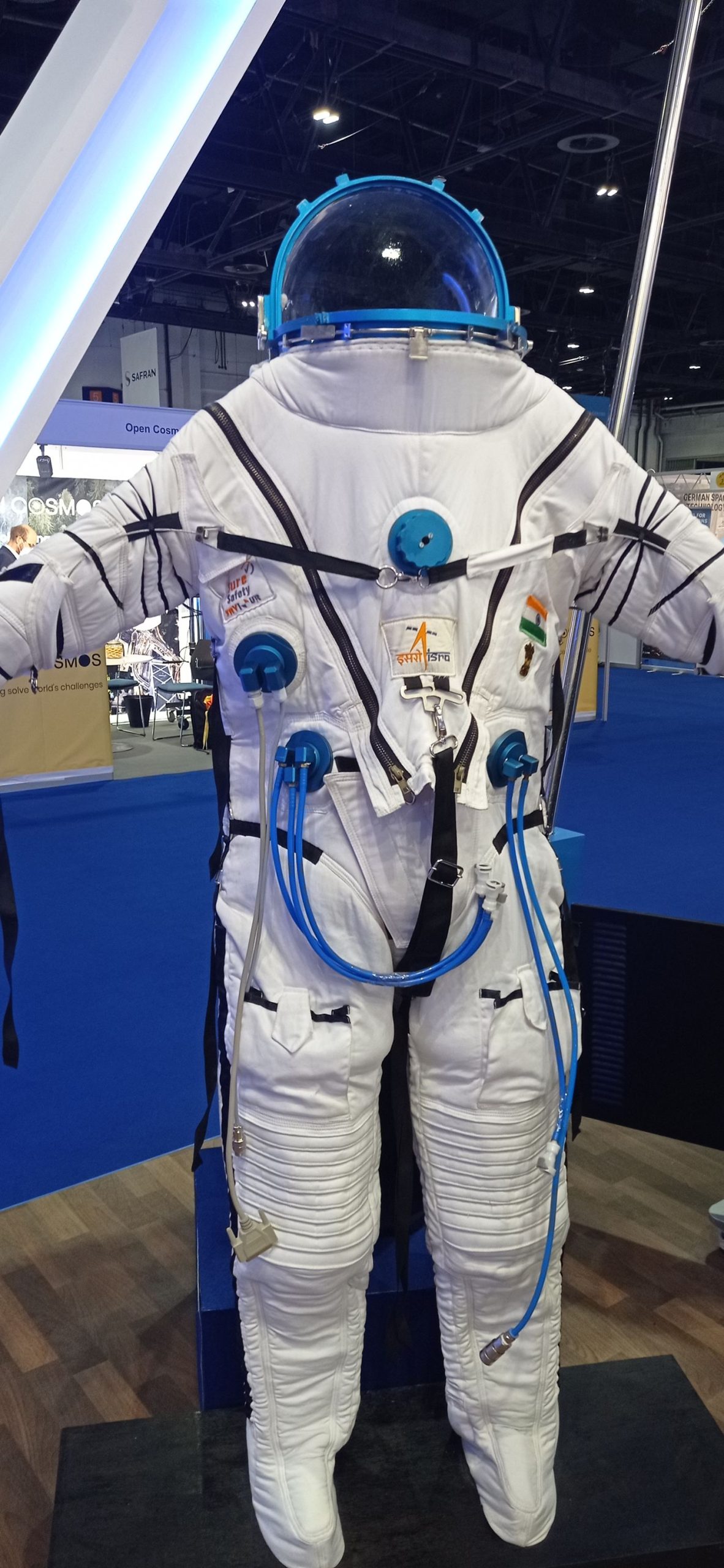
Only three nations have independently sent humans to space. India intends to become the fourth, and its programme — Gaganyaan, ‘sky craft’ — has moved from announcement to hardware: a human-rated rocket, a crew module that has survived abort tests, astronaut candidates who have trained abroad and at home, and a sequence of uncrewed flights designed to prove every system before lives depend on them.
Why human spaceflight is different
India’s space agency ISRO built its reputation on frugal, reliable uncrewed missions — lunar orbiters, a Mars mission on a famously lean budget, a record-breaking roster of satellite launches. Crewed flight changes the engineering philosophy. Every system needs redundancy; every failure mode needs an escape. The crew module must protect its occupants through launch aborts at any altitude, re-entry heating that turns its heat shield into the most tested object in the programme, and a splashdown recovery rehearsed with the navy.
Updates published by ISRO describe the methodical ladder: pad abort tests, air-drop tests of parachutes, uncrewed orbital flights carrying instruments and a humanoid robot to validate life-support. On oneindia.com.in our science desk has followed each rung, and the through-line is patience — a programme that would rather slip a date than a safety margin.
The astronauts and the nation
The astronaut designates — test pilots drawn from the air force — have become public figures in a way Indian engineers rarely do, a measure of what the mission represents. A successful flight places India in the small club of nations able to launch, sustain and return their own citizens, with consequences for everything from space-station ambitions — India plans its own station in the following decade — to the commercial crew market.
Our Science coverage also keeps the honest ledger: human spaceflight consumes resources that robotic missions spend more efficiently, and its justification is ultimately not scientific but civilisational — capability, inspiration, and a seat at the table where the rules of the space age are written.
What happens next
The remaining uncrewed flights must validate the full sequence end to end: launch, orbit, life-support performance, re-entry and recovery. Only then does the crewed mission get its date. When it flies, it will carry more than astronauts. It will carry the claim that a country which reached the Moon cheaply can now reach orbit with its own people — and bring them home.
The industry behind the mission
Gaganyaan is also quietly reshaping India’s space economy. Hundreds of domestic firms now supply components, materials and testing services to standards human spaceflight demands — valves, avionics, life-support hardware — lifting the whole sector’s quality ceiling. The private launch startups that have emerged under India’s space reforms are hiring engineers formed in this discipline, and the country’s space budget debates now weigh a commercial ecosystem, not only a national programme. Whatever date the first crew finally flies, the mission has already delivered part of its purpose on the ground: proof, distributed across an industry, that India can build machines on which human lives are the payload — and a workforce that knows how.
